Ribbon cable · Project RFQ
Ribbon Fiber Cable RFQ: Specify the Complete Project Order
A fibre count and the word ribbon are a starting brief. A comparable factory quotation also needs the ribbon arrangement, complete cable construction, splicing interfaces, test records and drum schedule.
Turn a project request into a defined manufacturing brief
For an importer, OEM buyer or project purchasing team, the goal of a ribbon cable RFQ is to describe one reproducible order. State the required fibres, their organization into ribbons, the complete cable construction and the evidence needed for acceptance. Jiaxin can review custom project supply against that brief. Confirmed drawings and the agreed quotation then provide the basis for production, inspection, marking and packing. This article covers the manufacturing order; choosing a network architecture remains a separate project decision.
Define the ribbon arrangement as well as total fibre count
Specify fibre type, total count, fibres per ribbon and the required ribbon format. If a tender uses terms such as conventional bonded, partially bonded or rollable ribbon, request a construction drawing that makes the intended arrangement clear. Record the coating dimensions and dimensional tolerances needed by the equipment and product specification. ITU-T L.101 describes several ribbon bonding arrangements and requires identification of individual ribbons. Its directly buried cable scope is relevant only when that is the ordered application; naming it does not make every ribbon cable suitable for burial.
Describe the complete cable around the ribbons
Add installation method, intended environment, outside dimensions and tolerance, strength system, water protection, armour where required, sheath and marking. Give the specified pulling, crush, bending and temperature requirements with the governing method and acceptance criterion. Ribbon describes fibre organization inside a cable; it does not by itself define the external protection. Comparing two quotations is easier when their offered constructions and declared deviations appear against the same requirement sheet.
Supply the splicing and closure interfaces
Identify the splicer, holders, stripping and cleaving equipment, protective sleeves, trays and closure configuration intended for the project. Where crews need to branch individual fibres from a ribbon, include that access requirement in the brief. Ask for confirmation of the actual interface rather than assuming that every product labelled ribbon works with existing tools. A representative sample review can expose a handling or tray issue before the bulk order. Record what was checked and which approved construction the sample represents.
Agree what the factory must measure and deliver
Define the optical tests, wavelengths, fibre mapping, acceptance limits and format of the required records. Add the dimensional, mechanical and environmental evidence specified by the order, separating routine lot checks from qualification or type-test requirements. Name witness or sampling obligations and their timing. A reference to a standard should identify the applicable scope and edition. Ask which evidence is available for the offered construction and which additional work must be included in the schedule and price.
Make fibre identification part of the order
Approve the fibre and ribbon identification schedule before manufacturing. Include any ribbon numbering, tube or unit identification and the relationship to the test-record file names. Where a buyer has its own colour-code system, attach the controlled version rather than writing 'standard colours'. Match the order line, construction revision, batch, drum number and report references at dispatch. A colour photograph supports review, while the written mapping gives the receiving and splicing teams a common reference.
Quote continuous lengths, packing and delivery by line item
List the required continuous lengths and quantity of each length. Include length tolerances, allowable drum dimensions and mass, drum marking, protective packing, handling constraints and delivery destination. Distinguish route reserve, spare drums and a permitted manufacturing length tolerance. When the project accepts a length alternative, record its impact on drum allocation before production. Avoid merging different constructions or lengths into one price line that cannot be reconciled with the BOM.
Use one approval package for the bulk order
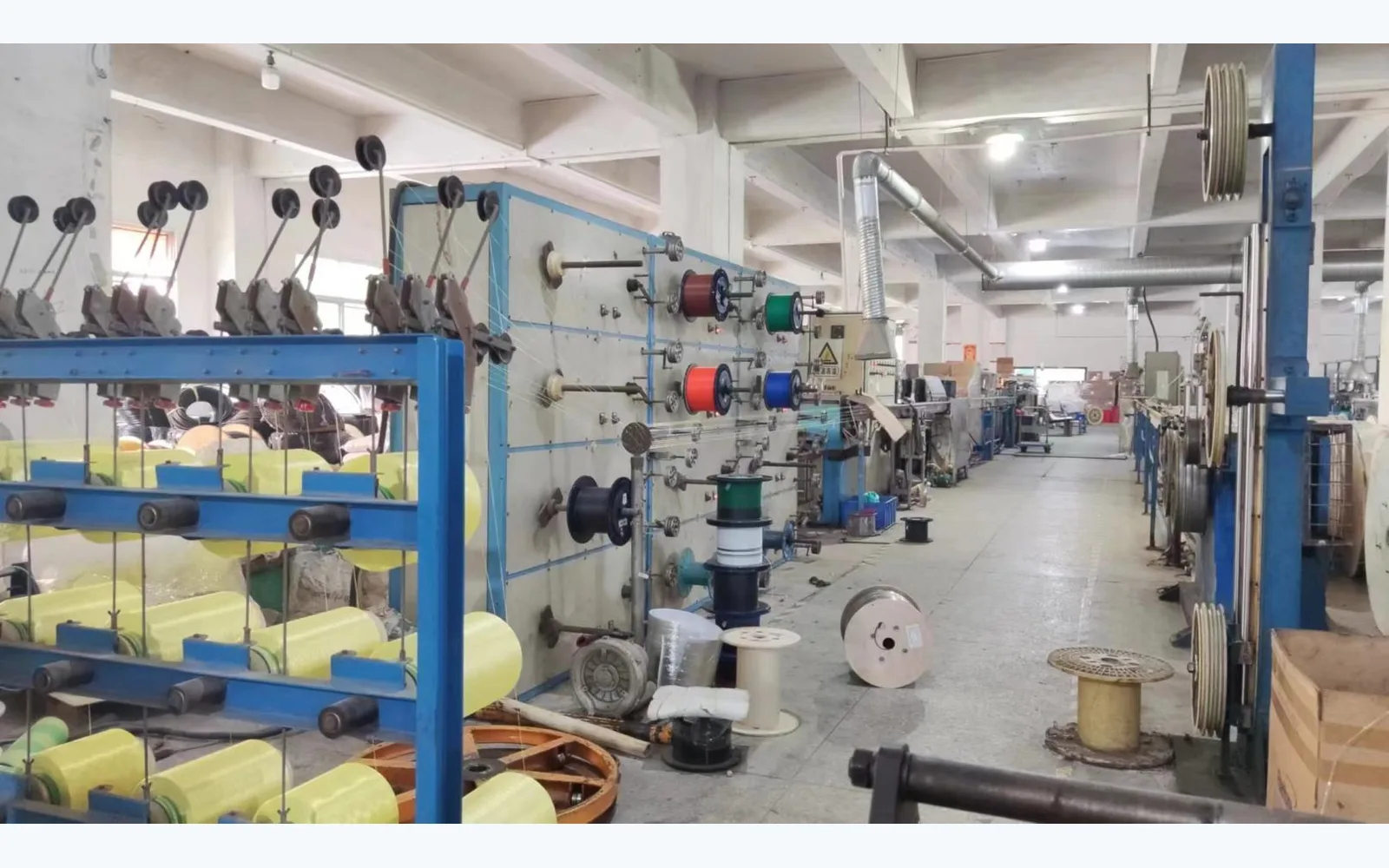
Keep the approved construction drawing, requirement sheet, sample outcome where applicable, inspection plan, marking artwork and packing schedule together. Identify who can approve a substitution and which affected documents need revision. Jiaxin can organize project cable and related materials around this agreed package. Delivery commitments should refer to the confirmed order scope and approval milestones. The cover shows the cable manufacturing workshop; it is a factory context image rather than a close-up of the ribbon design being offered.
FAQ: Is '288-fibre ribbon cable' enough to obtain a useful quotation?
It is enough to start a discussion, but not to compare final offers. Add fibre type, ribbon arrangement, cable protection, installation conditions, splicing interfaces and delivery requirements.
FAQ: Can existing mass-fusion tools be used?
Provide their exact references and the intended ribbon and fibre dimensions. Confirm the equipment, consumables and preparation method with the relevant manufacturers and a project-approved review.
FAQ: Can the fibre colour sequence be customized?
Include the required sequence and identification drawing in the RFQ. The accepted schedule must remain consistent across samples, production, test records and drum documents.
FAQ: Should a sample approval replace production acceptance?
No. A sample can confirm agreed interfaces and selected attributes. The bulk order still needs the approved construction, production controls and acceptance evidence specified in the contract.
Ribbon cable factory RFQ matrix
| Order field | Buyer supplies | Quotation should identify |
|---|---|---|
| Fibre organization | Total count, fibre type, ribbon size and format | Offered arrangement, dimensions and identification |
| Cable construction | Installation method, environment and required performance | Drawing, outside dimensions, protection and deviations |
| Splice interface | Tools, sleeves, trays, closures and branching needs | Compatibility questions and agreed sample scope |
| Acceptance | Methods, limits, sampling, witness and record format | Included evidence, additional work and approval timing |
| Delivery | Continuous lengths, quantities, drum limits and destination | Length schedule, labels, packing and delivery scope |
Six items to attach before requesting the final price
- Project specification and the exact fibre and ribbon requirement.
- Installation environment and complete cable construction requirements.
- Existing splicing and closure references, including individual-fibre access needs.
- Acceptance methods, criteria, sampling and document deliverables.
- Continuous length quantities, approved identification and packing requirements.
- Destination, delivery terms, approval owner and requested production milestones.
Prepare the surrounding order documents
Construction and splicing background
Send a ribbon cable specification we can quote
Share your project specification or BOM, fibre count and type, ribbon preference, installation environment, splice equipment and closure references, test requirements, continuous lengths, quantity and destination. Jiaxin can review the manufacturing configuration and list open items in the quotation.
Send the Ribbon Cable RFQ